Programming experiences, AI and nostalgic about books and the old internet and public transportation
Kattints ide a magyar változatért!
A lot of time has passed, since I posted anything on my website. There is a reason for that: these days I'm working full time, and I've finished university. I will just only say I'm programming A LOT. And I've gained a lot of experience with Python.
I also gathered experience in shell programming (bash), but I sometimes feel like I am dumb, because in shell you need to know, that there are three main programs you may need to learn: sed and awk and grep, because they manipulate (or filter) text and they are pretty powerful. Let's forget about the basics: ls, wc, rm, cp, cd etc.
Because of this gaps in my knowledge, I wished there were anywhere courses strictly only on advanced bash tooling, because Regular Expressions (regex) are a deep topic and useful, let it be finding a string in a text, where the pattern is fixed, so you know the format, but you don't know what to look for. It's perfect for that. From my experience, sed is great for transforming text streams. Awk feels like a tiny programming language designed for processing structured text, i would say it's like when you create a stringbuilder in Java or in C#, and then you start to do something, however it has a learning curve, and I'll connect this to the AI frenzy.
Now it's 2026. It seems AI hasn't replaced people YET, and what I do think about AI is, that it wastes a lot of electricity, although now we have better models like Claude Sonnet 5, I still do think that AI is just a tool, and not something that would replace us. Why? If you don't specify your prompt well defined, the AI is just like a dumb person, who will figure out on its own what should be done. OK, but in most of the cases the AI doesn't know the context, you need to specify the system, and then it will produce a better result. What I do think about 100% automated agents is that you don't see the process how it does it, just the result. That's dangerous, because in critical (or any) systems it would cause havoc, and that's not what anyone would want.
Lately I've also found myself becoming nostalgic for another reason: old computer books.
A friend of mine gave a pile of old computer books. I was genuinely happy to get them, although the excitement didn't last long for all of them. Some had a really strong musty smell from years of storage, and one of them even had black mold growing on it. That one went straight into the bin, and unfortunately a few others had to follow because of the smell.
As someone who genuinely enjoys collecting books, throwing them away felt awful. Books are one of those things that I always find difficult to part with, even if they're technically obsolete. Seeing old technical books end up as trash somehow feels wrong.
That experience reminded me why I started buying old computer books in the first place.
Back when I was in high school, I spent quite a lot of time in the school library whenever I had a one or two-hour gap between lessons. It was one of my favourite places in the building. The librarian, who also happened to teach history, was always friendly and enjoyed talking about history, current events, or whatever interesting topic came up. Looking back, those conversations are just as memorable as the books themselves.
What fascinated me the most wasn't fiction—it was the shelves full of old computer books. Linux manuals, Windows NT references, programming books... I could spend ages just browsing through them. Back then I didn't even realize there were complete series like PC-Iskola or Mit kell tudni a PC-ről? or Informatikai füzetek, books that had once helped students prepare for the old ECDL exams.
Years later I finally decided to build a small collection of my own.
I'm not trying to collect every old computer book ever printed. Instead, I try to choose books that represent different technologies and different eras. I have books about Windows 95, Windows 98, Windows 2000/ME, Windows XP, Linux, shell programming, networking, web development, databases, Office XP, even MIDI-tinkering. My goal isn't to own everything, but to preserve a snapshot of what learning computers looked like twenty or thirty years ago.
Some of those books are still surprisingly useful. A shell programming book from twenty years ago used bash, which in basics it's still the same. Regular expressions haven't magically changed. Many Linux commands are exactly the same today. The screenshots may be old, but the underlying ideas are often timeless.
One thing that made me smile a little was that when I ordered these books directly from BBS-INFO Ltd., the publisher himself, Mr. Barnabás Bártfai, left the following note inside my copy of The Internet and Its Possibilities, a book that he personally wrote:
Dear Customer!
Please note that a considerable amount of time has passed since the publication of the book you ordered. During this period, information technology has undergone significant changes, meaning that some of the information presented in this book is now outdated and no longer reflects the current state of things.
I honestly didn't expect that they would still be selling books this old, let alone include a note explaining that some of the content is no longer up to date. To be fair, the Internet-related book remained reasonably relevant until around 2013–2014, as iWiW was still operating back then. After that, however, iWiW was shut down, and Honfoglaló—which is also mentioned in the book—could no longer be played in a web browser because Adobe Flash itself reached the end of its life. Sadly, much of what defined the early Internet has become history, but I'll talk about that in more detail in the following chapter. One nice thing is that Mr. Bártfai also offers to personally sign his books, which I think is a wonderful touch, as it turns them into keepsakes and little collector's items.
Besides this series, Mr. Bártfai is also well known for his How Do I Start? and How Do I Use It? book series. Interestingly, many of my friends are actually more familiar with his Office Pocket Guides (for example, Excel 2010 Pocket Guide). Personally, though, I don't really see a reason to buy the How Do I Use It? books, because the Informatics Booklets, which were designed to prepare readers for the ECDL exams, were largely based on them—and in some cases they even go into more detail than the original How Do I Use It? volumes.
BBS-INFO books can still be purchased directly from the publisher. They are also available from bookstores such as Bookline and Libri, while older editions can often be found in second-hand bookstores and online antiquarian shops such as antikvarium.hu.
The old Internet
The books are only one part of the nostalgia, though.
I also miss the internet of the late 2000s.
Back then it felt like everyone had their own little corner of the web. There were Flash game sites like Miniclip, Newgrounds, Kongregate, and Armor Games. There were countless forums dedicated to every imaginable hobby. Communities were smaller, slower, and somehow felt more personal. (indeed, because forums were not instant chats, where you waited for the answer)
One place I remember particularly well was the old an old forum for the youth. Looking back, it's funny how little we knew about internet safety. I actually registered there using my real name because nobody had ever explained that it might not be a great idea. A year or two later I changed it to a nickname, but at the time that simply wasn't something anyone taught us.
Nobody really taught me internet etiquette either. I learned it by making mistakes, in short, I sometimes said stuff I shouldn't have. (FYI I did some research if I could find anything about it, but no, it's vanished. I know cybersecurity, don't worry. OSINT is a thing that I myself am VERY aware of)
Around 2010, a group of us from that Forum created our own little community on a Forum community in Hungary. There were maybe ten or fifteen of us, and we treated our forum like it was the most important place on the internet. We even competed to climb the forum popularity rankings. At one point we actually reached the top section of the leaderboard, which felt like a huge achievement back then.
Eventually, life happened.
People went to high school, university, started working, and the forums slowly became quieter until that forum platform itself disappeared. I'm an adult now, and I sometimes wonder what happened to those people. Some of them are probably married. Some probably have children. A few disappeared from the internet completely.
The modern internet is better in some ways. Privacy is taken much more seriously. GDPR exists for a reason. Social media made communication incredibly convenient, although child protection is something I would also argue with. Some experts would say it is working well, however, I think AI-based detectors are bad and filter in a weird way. But also kids sometimes they make themselves vulnerable by behaving uncontrolled (worse than I did), but also they use voice chatting features, which I didn't do that back, but also I didn't engage in private conversations of full random people privately, since luckily, my parents controlled who I talk to, for example, on iWiW (since yes I used to have iWiW account) I didn't accept request of full random people. Since it's my personal blog I won't go into the dangers of being a kid vs talking to people older than 10+ years your age, but yeah there are lot of dangers. Just google it up. Now as an adult, it's different. I have some friends who are 40+ years of age, and have similar interests as me.
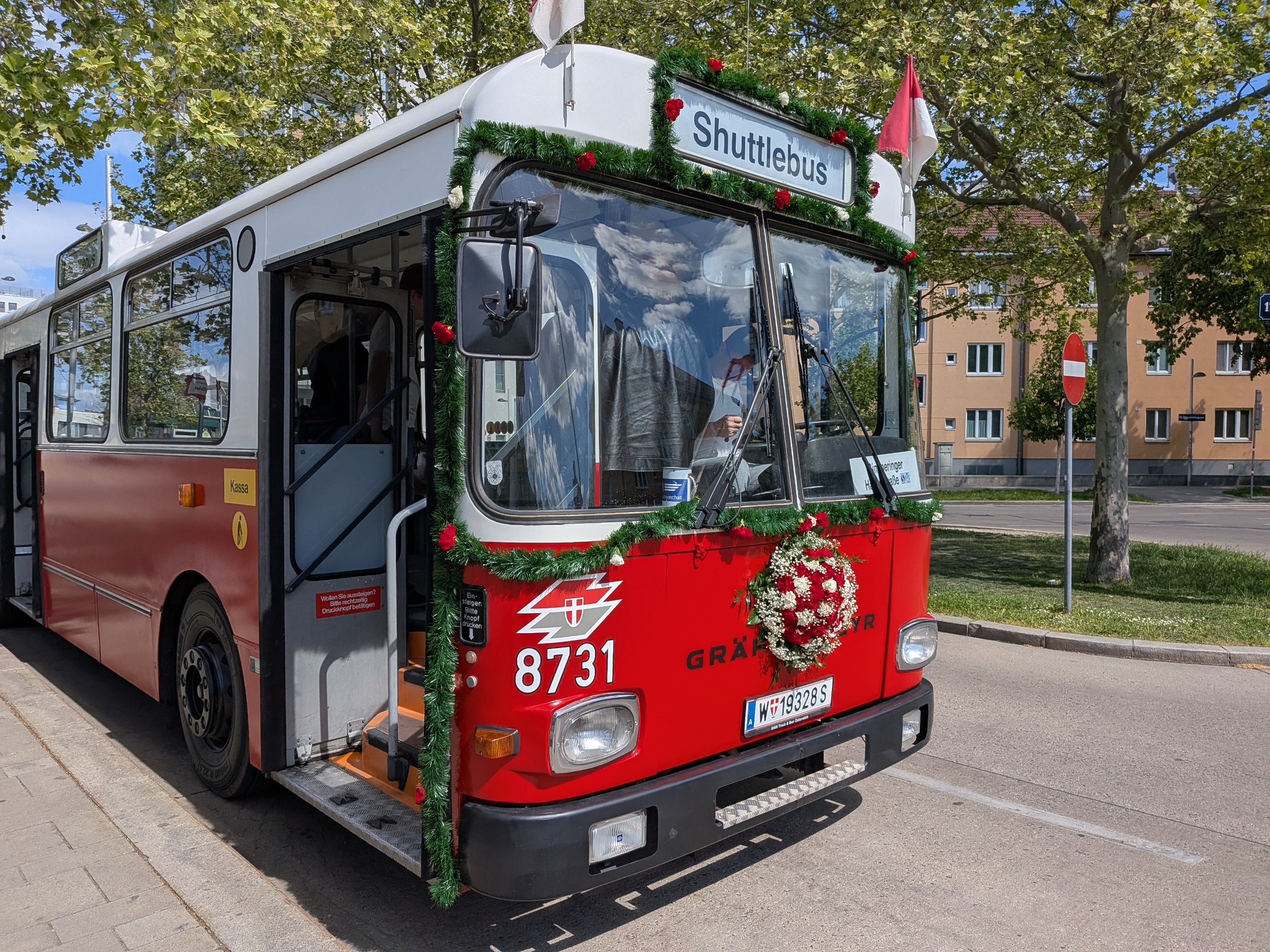
The problem is that I know how kids are like in the age of ~10. They are curious, and of course they're gonna explore everything in any means, and try out a lot of games, social platforms, and Tiktok added a huge boost to attention-seeking people, so that they want to stand out and everyone should look on them. Then I know there is also the subculture of the so-called "public transportation photographers", because I like public transportation, especially old vehicles (eg. Ikarus 200-series buses, or old MAN/Mercedes buses like MAN SL200/Gräf & Steyr LU200 M11 or Mercedes O305). Some kids what I heard of they are usually in the aura of the bus drivers and other transportation fans, sometimes destroying the fun. I know they are curious but they don't know the limits. I sometimes managed to keep it sane, so i didn't have much problems, but yeah the internet was a wild west then. Now it's a technological desert, not so fun as it used to be anymore.
But at the same time, I sometimes miss that old "wild west" feeling of the internet. It wasn't necessarily better—it was just different. People built personal websites. Forums had their own identities, not just like you doomscroll your feed, which I find eh, a bit discomforting. You're scrolling the feed and you find nothing interesting for your needs.
Maybe that's why I enjoy collecting old computer books.
They're not just books about operating systems or programming languages. They remind me of a different era of computing, a different internet, and a time when discovering technology felt a little more personal.
Here is my collection:
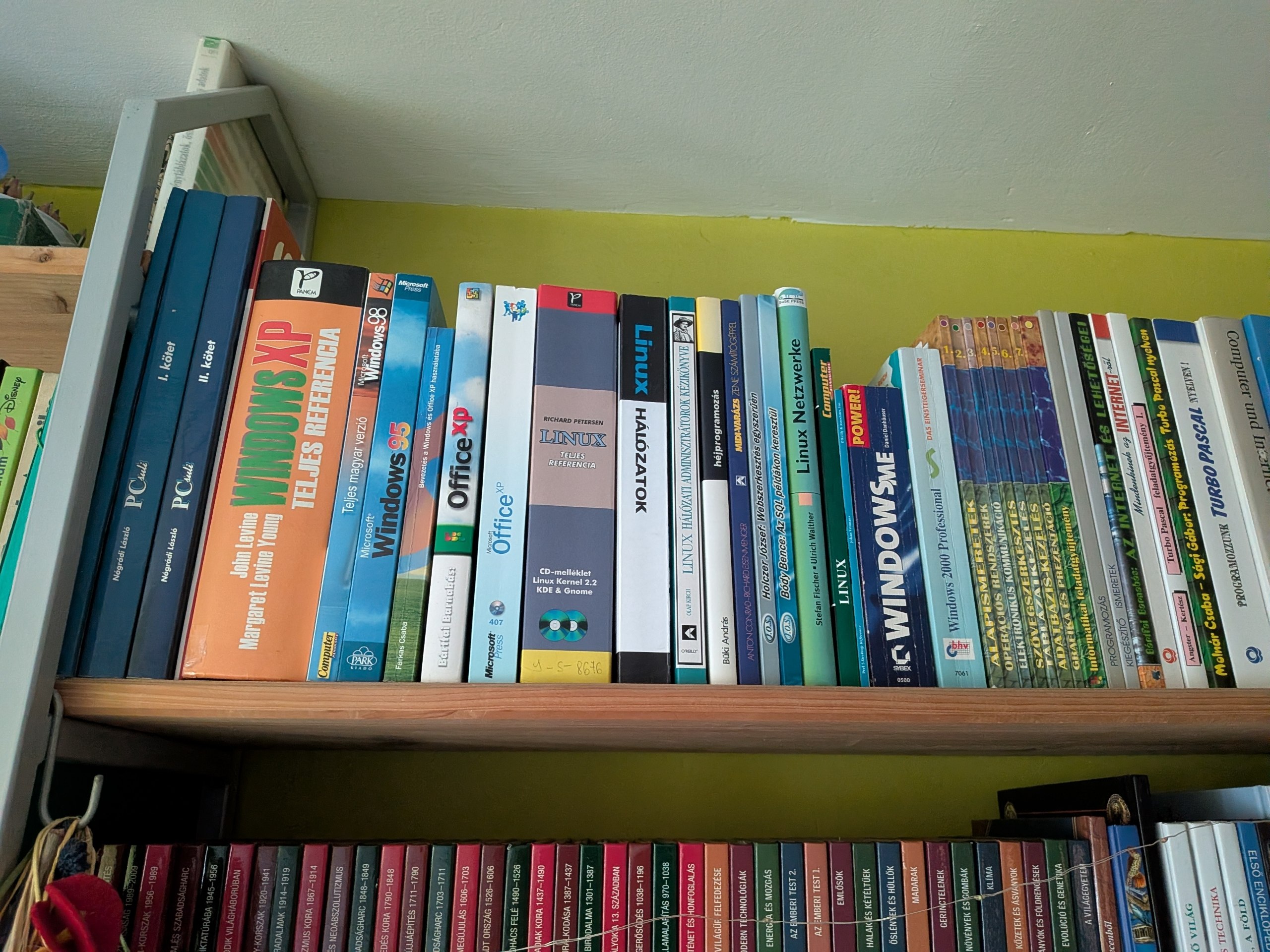
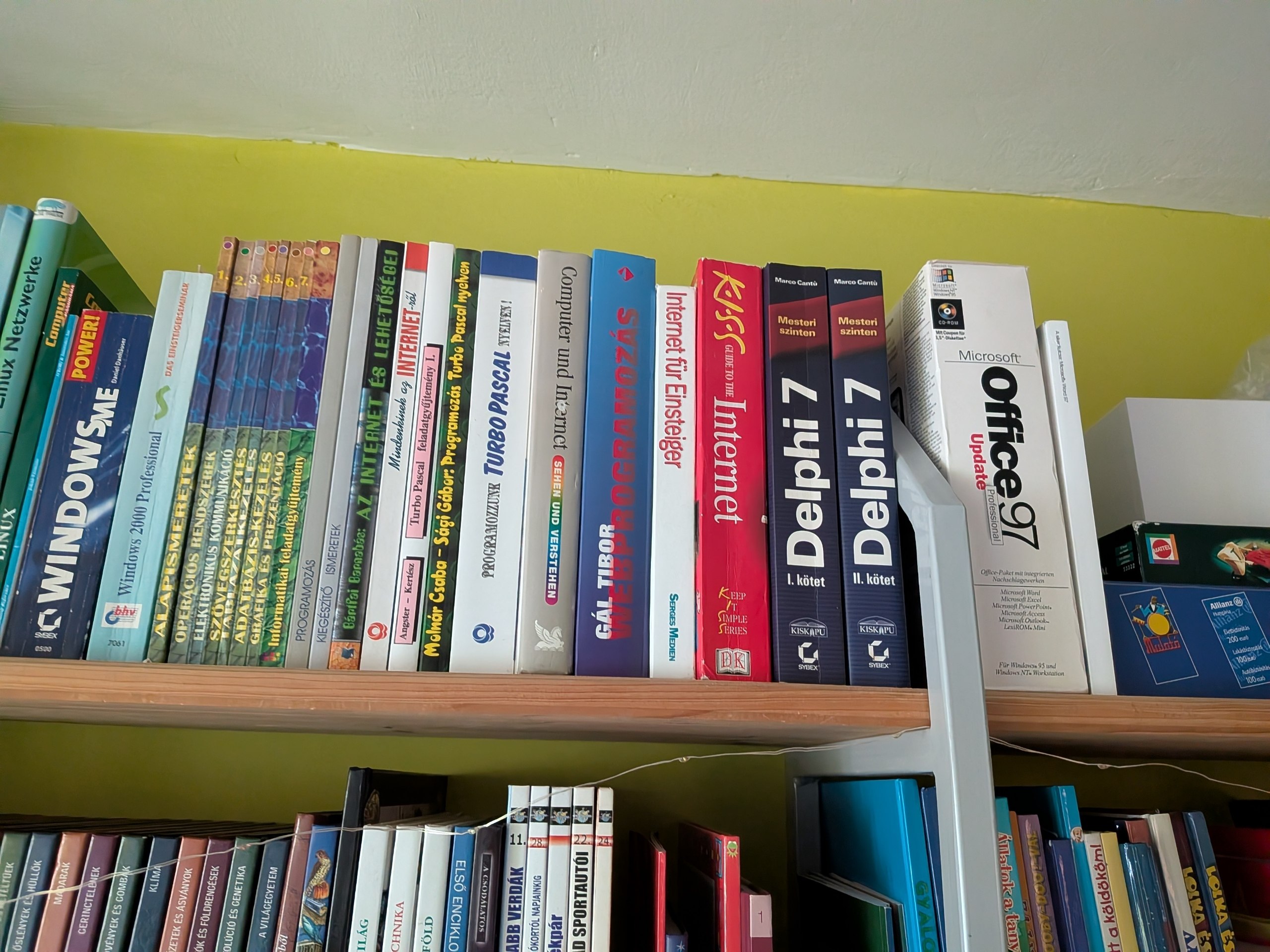
Traveling and old public transportation vehicles
And then connecting this to the traveling, and old public transportation vehicles, is that when it's possible, I try to travel with old public transportation vehicles, which I have fond memories of, because they got the charm, for example, the singing axle of the bus, the rattling engine, and the more comfortable seats (because today's buses don't have much cushion, and they sometimes feel uncomfy), and the smell of the diesel. Imagine you are on an Ikarus 260 bus with an old natural aspirated diesel engine (or even the Rába D10 Turbodiesel engine's sound...) mmmmmm... yes, that's something that you recognize from anywhere. Now in Budapest we have MAN Lion's City 12C buses, which are CNG powered, of course, they run quiet, they are not stinky, however they don't have a character... They're just.. quiet. When I was in Vienna, Austria, I was happy to onboard a similar Ikarus-like bus (which is the Gräf & Steyr LU200 M11 bus, i'll link a picture here)
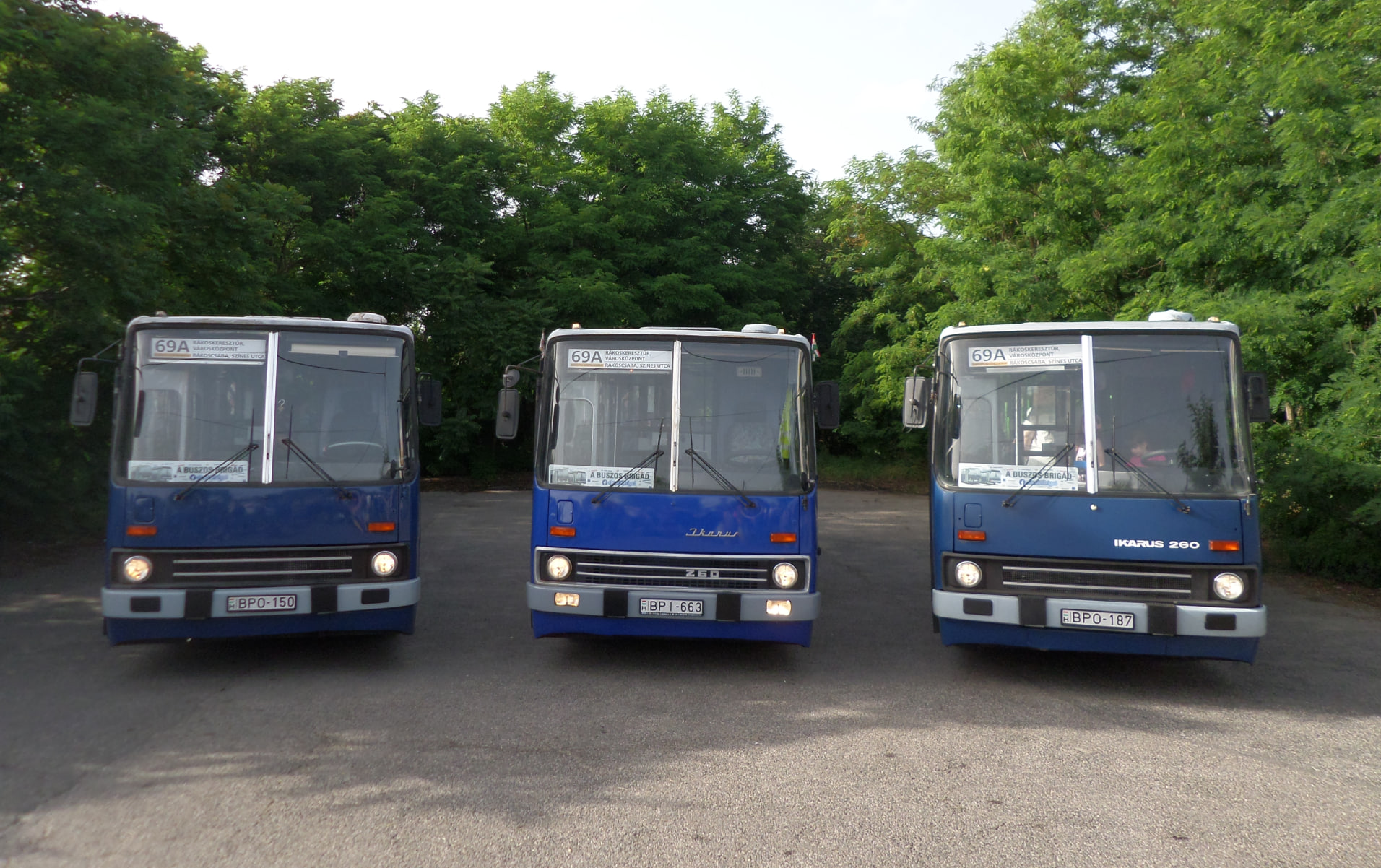
There are some videos of the mentioned buses, so that you see what I mean: